
Hereditary Cataracts and
the Cavalier King Charles Spaniel
-
 What
It Is
What
It Is - Symptoms
- Diagnosis
- Treatment
- Breeders' Responsibilities
- What You Can Do
- Research News
- Related Links
- Veterinary Resources
The cavalier King Charles spaniel has a strong breed predisposition to develop congenital, early-onset juvenile cataracts, which appear by 6 months of age in both eyes and progress to complete cataracts and total blindness by between ages 2 and 4 years. This form of cataract usually is combined with other ocular disorders. Older cavaliers also are prone to develop a non-congenital form of cataract, usually in both eyes, which also are progressive, and may be expected to form in cavaliers as old as 7 years of age. See this 2022 book.
RETURN TO TOP
What It Is
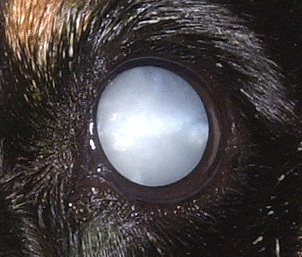
A cataract is defined as an opacity in the lens. The eye's lens usually is clear or transparent, and focuses light rays on the retina. The opacity is usually white, but can have a yellowish or grayish appearance as well, and it scatters the light rays. The extent of the vision impairment is determined by the size and location of the cataract in the lens. The size ranges from pinhead marks to total lens opacity (as in photo at right). The larger the cataract, the more severe the effect on sight.
 The other form of inherited cataract which has been identified in cavaliers
is congenital, meaning that it was present at and existing from the time of
birth or before 8 weeks of age. The congenital cataract is bilateral, but not
necessarily symmetrical, with the two eyes often being affected to different
degrees, and it often is associated with
micropthalmos, an
abnormal smallness of the eyeball. The more severe the micropthalmos, the more
extensive is this type of cataract.
The other form of inherited cataract which has been identified in cavaliers
is congenital, meaning that it was present at and existing from the time of
birth or before 8 weeks of age. The congenital cataract is bilateral, but not
necessarily symmetrical, with the two eyes often being affected to different
degrees, and it often is associated with
micropthalmos, an
abnormal smallness of the eyeball. The more severe the micropthalmos, the more
extensive is this type of cataract.
Cataracts also are a consequence of diabetes. In diabetic dogs, cataracts may advance much more rapidly than inherited cataracts. Also, cataracts may develop as a side effect of the later stage of progressive retinal atrophy (PRA).
All CKCSs should be examined at least annually by a board certified veterinary ophthalmologist. They are listed on this webpage of the website of the ACVO.
RETURN TO TOP
Symptoms
Cataracts usually are discovered first by noticing discoloration in the cavalier's eyes. The center of the eye will appear light gray or yellowish, or white. Also, the owner likely will observe the dog having visual difficulties. The cavalier may bump into things, including familiar objects, or appear tentative about moving up or down on stair steps.
RETURN TO TOP
Diagnosis
Cataracts are visible using an ophthalmoscope and may be discovered during a routine eye examination.
• Incipient: Up to 15% of the lens volume.
• Immature: From 15% to 99% of lens volume. Visual impairment is variable, from minimal to near-complete blindness.
• Mature: 100% of lens volume. Eyes are blind but retain physical reflexes if the retina is functional.
RETURN TO TOP
 Treatment
Medication
Initial medical management of cataracts are topical ophthalmic anti-inflammatory drugs, either steroidal or non-steroidal. Non-steroidal anti-inflammatory drugs (NSAIDs), include diclofenac (Voltaren) or ketorolac (Toradol, Biorolac). Use of NSAIDs may be limited, depending upon other health conditions, including diabetes.
A topical ophthalmic iridocycloplegic, such as atropine, may be prescribed if the dog's introcular pressure (IOP) measurement is normal or below normal. However, atropine may cause extreme tachycardia and increase cardiac oxygen demand.
Surgery
If the cataracts seriously affect the dog's vision, they may be removed by surgery. Phacoemulsification is a cataract surgery method in which the internal lens is emulsified with an ultrasonic probe and the sucked from the eye.
Some ophthalmologist surgeons also will insert an artificial replacement lens which reportedly will restore near-normal vision. Implant replacement surgeries usually take about an hour per eye and reportedly are about 90% of them have been successful for dogs deemed to be good candidates for the surgery. Surgeons usually recommend operating on both eyes at the same time, since if a cataract is diagnosed in one eye, the other eye usually will develop one, as well.
If the cataracts develop as a consequence of progressive retinal atrophy (PRA), cataract surgery would not be performed, because the PRA would be the cause of blindness, notwithstanding surgery on the cataracts.
Following the surgery, the dog will be required to wear an Elizabethan collar for about three weeks, to avoid scratching the eyes while they are healing.
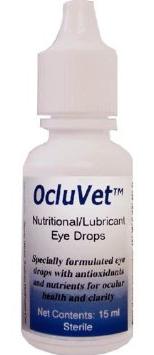
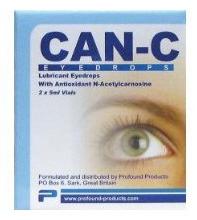 A
topical eye drop product consisting of
N-acetyl carnosine and
antioxidants and nutrients, called
OcluVet, has been developed by
PractiVet. The
manufacturer represents that clinical studies of the product have shown "a
measurable reduction in opacity" of the cataracts in 80%+ of the eyes in the
studies. The degree of improvement seems to hinge on the age of the cataract,
with immature cataracts being more responsive to the treatment than mature
cataracts. Other N-acetyl carnosine eye drops are
Can-C by
Profound Products in
the UK, and
Bright Eyes Drops by Ethos.
A
topical eye drop product consisting of
N-acetyl carnosine and
antioxidants and nutrients, called
OcluVet, has been developed by
PractiVet. The
manufacturer represents that clinical studies of the product have shown "a
measurable reduction in opacity" of the cataracts in 80%+ of the eyes in the
studies. The degree of improvement seems to hinge on the age of the cataract,
with immature cataracts being more responsive to the treatment than mature
cataracts. Other N-acetyl carnosine eye drops are
Can-C by
Profound Products in
the UK, and
Bright Eyes Drops by Ethos.
In a February 2017 article, the author expressed a contrary view about N-Acetyl carnosine, stating:
"A study evaluating the effect of N-acetylcarnosine in dogs with a variety of lens opacities, ranging from nuclear sclerosis to mature cataracts, showed no significant reduction of lens opacity in lenses with advanced cataracts. Clinically, no board-certified veterinary ophthalmologist has witnessed success with these drops and sadly, many of the eyes 'treated' with these drops progress to develop complications that do not allow surgery. Valuable time is lost in these dogs during which cataract surgery could have been performed, but instead, lens-induced uveitis relentlessly damages the eye."
In a July
2015 article, Chinese researchers reported that they treated 7 dogs which had cataracts
(grade 1 - incipient, grade 2 - immature, or grade 3 - mature cataracts) with
lanosterol (an
amphipathic molecule
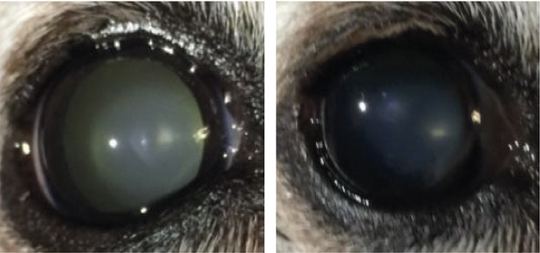 enriched in the lens) in topical eye drops. It is synthesized by lanosterol synthase (LSS) in a key cyclization reaction
of a cholesterol synthesis pathway. The cataracts in all 7 of the dogs
either disappeared or improved following the treatment, as follows: 2
dogs improved from grade 1 to grade 0; three dogs improved from grade 2
to grade 1; one dog improved from grade 2 to grade 0; and one dog
improved from grade 3 to grade 1. (See before and after photos at right.)
enriched in the lens) in topical eye drops. It is synthesized by lanosterol synthase (LSS) in a key cyclization reaction
of a cholesterol synthesis pathway. The cataracts in all 7 of the dogs
either disappeared or improved following the treatment, as follows: 2
dogs improved from grade 1 to grade 0; three dogs improved from grade 2
to grade 1; one dog improved from grade 2 to grade 0; and one dog
improved from grade 3 to grade 1. (See before and after photos at right.)
An holistic alternative eye drop is Natural Ophthalmics, with cineraria.
RETURN TO TOP
Breeders' Responsibilities
 The Genetics Committee of the ACVO recommends that CKCSs which have cataracts
not be bred. See
The Blue Book. The Canine Inherited Disorders Database also recommends that any
cavalier King Charles spaniel which has an hereditary cataract, or any cavalier
which has parents or any littermates which have had hereditary cataracts, not be
bred.
The Genetics Committee of the ACVO recommends that CKCSs which have cataracts
not be bred. See
The Blue Book. The Canine Inherited Disorders Database also recommends that any
cavalier King Charles spaniel which has an hereditary cataract, or any cavalier
which has parents or any littermates which have had hereditary cataracts, not be
bred.
The Cavalier King Charles Spaniel Club, USA recommends that, prior to breeding any cavalier, the dog have a "normal" rating from a screening by a board certified veterinary ophthalmologist.
The Canine Health Information Center (CHIC) is a centralized canine health database sponsored by the AKC/Canine Health Foundation (AKC/CHF) and OFA. The CHIC, working with participating parent clubs, provides a resource for breeders and owners of purebred dogs to research and maintain information on the health issues prevalent in specific breeds.
AKC's national breed clubs establish the breed specific testing protocols. Dogs complying with the breed specific testing requirements are issued CHIC numbers. The ACKCSC requires that, to qualify for CHIC certification, cavaliers must have a CERF eye examination, recommending that an initial CERF exam be performed at 8 to 12 weeks, with a follow up exam once the dog reaches 12 months, and annual exams thereafter until age 5 years, and every other year until age 9 years. However, all that is required to qualify for a CHIC certificate is that the breeding stock be examined by a veterinary ophthalmologist. It does not require that the results of the examination show no eye disorders.
Nevertheless, all cavalier breeding stock should be examined by board certified veterinary ophthalmologists at least annually and cleared by the veterinary specialists for hereditary cataracts, the closer the examination to the breeding the better.
RETURN TO TOP
 What You Can Do:
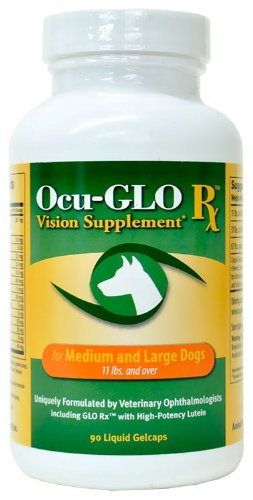
Ocu-GLO Rx is a nutraceutical containing several natural antioxidants in a combination blend formulated specifically for canine eye health. Many veterinary ophthalmologists recommend this product to maintain healthy eyes. Even if your dog has not been diagnosed with a vision disorder, antioxidants contained in Ocu-GLO Rx are considered helpful in keeping dogs' eyes healthy.
RETURN TO TOP
Research News
July 2015:
Chinese researchers heal
dogs' cataracts with lanosterol.
A large team of Chinese researchers report in a
July
2015 article that they treated 7 dogs which had cataracts (grade 1 - incipient,
grade 2 - immature, or grade 3 - mature cataracts) with lanosterol (an
amphipathic molecule enriched in the
lens) in topical eye drops. It is synthesized by lanosterol synthase (LSS) in a key cyclization reaction
of a cholesterol synthesis pathway. The cataracts in all 7 of the dogs
either disappeared or improved following the treatment, as follows: 2
dogs improved from grade 1 to grade 0; three dogs improved from grade 2
to grade 1; one dog improved from grade 2 to grade 0; and one dog
improved from grade 3 to grade 1. (See before and after photos at right.)
April 2015:
VetCompass analysis shows frequent diagnoses of cataracts in cavaliers.
 In an
April 2015 report by UK and Australian veterinarians (Jennifer F
Summers, Dan G. O'Neill, David B Church, Peter C. Thomson, Paul D.
McGreevy, David C. Brodbelt), the veterinary records of 1,875 cavalier
King Charles spaniels treated between 2009 and 2013 and on the database
of the VetCompass animal health surveillance project, were dissected.
Only 75 of the 1,875 cavaliers had a confirmed KC-registration status.
They found that cataracts were diagnosed relatively frequently, but they
could not differentiate between inherited, early forms, and age-related
degenerative cataracts.
In an
April 2015 report by UK and Australian veterinarians (Jennifer F
Summers, Dan G. O'Neill, David B Church, Peter C. Thomson, Paul D.
McGreevy, David C. Brodbelt), the veterinary records of 1,875 cavalier
King Charles spaniels treated between 2009 and 2013 and on the database
of the VetCompass animal health surveillance project, were dissected.
Only 75 of the 1,875 cavaliers had a confirmed KC-registration status.
They found that cataracts were diagnosed relatively frequently, but they
could not differentiate between inherited, early forms, and age-related
degenerative cataracts.
October 2013:
Dr. Peter Bedford reports on congenital and hereditary cataracts in CKCSs.
In the
 Autumn 2013 issue of
EJCAP Online for the Federation of European Companion
Animal Veterinary Associations (FECAVA), UK ophthalmologist Dr. Peter G. C. Bedford
summarizes the research in hereditary eye disorders. He states that congenital
nuclear cataract may accompany microphthalmos,
persistence of remnant pupillary membrane (PPM) and retinal dysplasia in the
Cavalier King Charles Spaniel. He also states that the cavalier is affected with
hereditary cataracts up to age seven years.
Autumn 2013 issue of
EJCAP Online for the Federation of European Companion
Animal Veterinary Associations (FECAVA), UK ophthalmologist Dr. Peter G. C. Bedford
summarizes the research in hereditary eye disorders. He states that congenital
nuclear cataract may accompany microphthalmos,
persistence of remnant pupillary membrane (PPM) and retinal dysplasia in the
Cavalier King Charles Spaniel. He also states that the cavalier is affected with
hereditary cataracts up to age seven years.
March 2013: N-acetyl carnosine, again. International Antiaging Systems also offers an N-acetyl carnosine eye drop, called Can-C. Its website is www.can-c.net
September 2006: N-acetyl carnosine. In a study of 64 dogs and other species, conducted by veterinarians in 23 clinics in the United States, 64 patients with cataracts or lenticular sclerosis conditions were treated with eye drops consisting of antioxidants and nutrients, including N-acetyl carnosine, L-Carnosine, L-Taurine, and Glutathione. After eight weeks of treatment, 56 of the 64 patients showed a measurable reduction in opacity density or improved acuity. The study was conducted by PractiVet, the manufacturer of the eye drop product, which is called OcluVet. PractiVet is located in Phoenix, Arizona. Its website is www.ocluvet.com
September
2006: N-acetyl carnosine.
 In an article in Veterinary
Ophthalmology, Dr. David L. Williams (right)
of the Department of Clinical Veterinary Medicine at the University of Cambridge
in the UK reports the results of a similar study with the same OcluVet product.
His results:
In an article in Veterinary
Ophthalmology, Dr. David L. Williams (right)
of the Department of Clinical Veterinary Medicine at the University of Cambridge
in the UK reports the results of a similar study with the same OcluVet product.
His results:
"Fifty-eight eyes of 30 dogs were evaluated, 22 with mature cataract, 13 with immature cataract, 9 with cataract associated with other intraocular disease such as uveitis and 14 with nuclear sclerosis alone. One dog was unilaterally anophthalmic after previous enucleation and one had a phthytic eye after previous uveitis-induced glaucoma. Image analysis showed a reduction in mean LOI in all cataract groups (mean resolution in opacity of 2.3± 0.33% for all cataracts), although this was only statistically significant in those eyes with immature cataract (mean resolution of opacity 4.5± 0.33%) or nuclear sclerosis (mean decrease in opacity 5± 0.37%). Reduction in lens opacity was seen in eyes with mature cataract (0.5± 0.4%) and in miscellaneous cataract associated with intraocular inflammation (1.3± 0.4%), but these changes were not statistically significant. Owner evaluation of visual capability, however, suggested improvement in vision in 80% of cases by the end of the study."
Dr. Williams concluded that:
"This study demonstrates some marginal reduction in lens opacification in a substantial number of cases of canine cataract with the use of a topical nutritional antioxidant formulation including N-acetyl carnosine. Lens opacification was improved with treatment in eyes with immature cataract or nuclear sclerosis while in eyes with mature cataract or cataract with associated intraocular inflammatory pathology less reduction was seen."
Dr. Williams may be contacted at, telephone in the UK: 07939 074682; email: doctordlwilliams@aol.com; website: http://davidlwilliams.org.uk
RETURN TO TOP
Related Links
Veterinary Resources
Posterior lenticonus, cataracts and microphthalmia: congenital ocular defects in the Cavalier King Charles Spaniel. Narfstrom K, Dubielzig R. J. Sm. Anim. Pract. 1984; 25: 669-677. Quote: Eleven cases of congenital ocular defects were found in the screening of 144 Cavalier King Charles Spaniels in Sweden. Mainly posterior lenticonus, cataracts and microphthalmia were observed in the affected dogs, most of which were interrelated. Pathology was obtained from one of the cases demonstrating bilateral posterior lens capsule rupture with an unusual cellular reaction of the exposed lens material. ... The lenticular abnormalities found in the Cavalier King Charles Spaniel breed of dog mainly affect the nucleus, posterior cortex and the posterior capsule. These defects, together with an intact posterior lens capsule, indicate an early developmental insult in the formation of the foetal lens. Numerous theories have been proposed to explain posterior lenticonus formation. Most of the histologic evidence supports a congenital defect involving an abnormal embryonic remnant in the epithelial cell proliferation before the lens capsule forms or a hyperplasia of the lens accompanied by a thinning of the capsule over the defect. In the Cavalier dog the latter explanation seems to be the most likely. Persistence of hyaloid vessels or remnants of these is further evidence of an early developmental aberration. Microphthalmia is a common finding in conjunction with other severe ocular malformations which were also found in the present study.
The diagnosis and differential diagnosis of cataract in the dog. K. C. Barnett. J.Sm.Anim.Pract. June 1985;26(6):305-316. Quote: Cataract is a common eye condition in the dog, classified in several ways and with a varied aetiology. The clinical appearance of hereditary cataract is described in the Boston Terrier, Miniature Schnauzer, Staffordshire Bull Terrier, Cavalier King Charles Spaniel, Golden Retriever, Labrador Retriever, Large Munsterlander, English Cocker Spaniel, American Cocker Spaniel, Afghan Hound, Welsh Springer Spaniel, German Shepherd Dog, Standard Poodle. Cataracts secondary to other eye diseases, both hereditary and non-hereditary, and to systemic conditions are also discussed, as well as the differential diagnosis of cataract. ... The Cavalier King Charles Spaniel: Hereditary cataract has not, to date, been reported in the literature in this breed but recent investigations have revealed the possibility of two different forms of cataract with evidence of inheritance in both. The first form shows similarities to that described above in the Miniature Schnauzer in that it is congenital and associated with microphthalmos and could, therefore, also be described, as in the case in the Staffordshire Bull Terrier above, as a secondary hereditary cataract. The cataract is bilateral, but not necessarily symmetrical, the two eyes often being affected to different degrees. Frequently the main opacity is nuclear but both capsular and cortical opacities also occur. The nuclear and capsular opacities would seem to be stationary, as could be expected, but progression of the cortical cataracts can and does occur. The degree of microphthalmos is variable and, as a general rule, the more severe the microphthalmos the more extensive the cataract. The microphthalmos is more obvious in the adult dog than in the young puppy. Other ocular anomalies are present including abnormalities of the ciliary body and iris hypoplasia. Additional, and most interesting, lens anomalies are lenticonus and the more severe lentiglobus, in which the posterior aspect of the the lens protrudes to varying degrees, occasionally quite extensively, into the vitreous. These anomalies are obvious on post-mortem examination of the opened eye but can also be suspected in life on slit-lamp examination and appear as a vesicle-like protuberance at the posterior pole of the lens. Another type of cataract in the Cavalier King Charles Spaniel, not congenital and not associated with microphthalmos or any other ocular anomaly. also occurs. This cataract is bilateral, symmetrical and progressive and becomes total in young adult dogs, as with several other breeds with primary hereditary cataract. Further investigations are being conducted.
Control of Canine Genetic Diseases. Padgett, G.A., Howell Book House 1998, pp. 198-199, 238-239.
Ocular Disorders Presumed to be Inherited in Purebred Dogs. Genetics Committee, ACVO 1999.
Guide to Congenital and Heritable Disorders in Dogs. Dodds WJ, Hall S, Inks K, A.V.A.R., Jan 2004, Section II(42).
Breed Predispositions to Disease in Dogs & Cats. Alex Gough, Alison Thomas. 2004; Blackwell Publ. 44-45.
Prevalence of canine cataract: preliminary results of a cross-sectional study. Williams D.L., Heath M.F., Wallis C. Vet. Ophthalmology, 7 (1): pp. 29-35, Mar 2004. Quote: "Objective: In this study 2000 dogs [including 42 cavalier King Charles spaniels] were examined ophthalmoscopically to determine presence of cataract. Materials and methods: The dogs examined were predominantly from veterinary hospital populations but also from the Waltham Center For Pet Nutrition, rehoming charities and breeding kennels. Prevalence of cataract was thus determined for different age groups (year cohorts). The age at which prevalence of cataract was 50% (C 50) was determined indirectly from a fitted prevalence curve. Results: The mean ± standard deviation of C 50 for all dogs in the study was 9.4 ±3.3 years. All dogs over 13.5 years were affected by some degree of lens opacity. C 50 was determined for animals of different genders and different breeds. For dogs of six breeds sufficient data were available for calculation of breed-specific C 50. ... For three other breeds, Miniature Poodle (39 dogs), Cavalier King Charles Spaniel (42 dogs) and English Springer Spaniel (61 dogs), sufficient data were available to calculate a meaningful C 50 value and thus C 50 and longevity could be compared for these breeds. ... For these breeds C 50 was between 0.68 and 0.85 of longevity. An association between C 50 and longevity was determined with a least squares correlation coefficient of 0.74 and a P-value of 0.082, nearing statistical significance.In these dogs C 50 was positively correlated with longevity with a least squares correlation coefficient of 0.74. Conclusion: The study yields novel findings regarding the prevalence and incidence of cataract in the dog and forms the basis for considerable further work on the epidemiology and pathophysiology of age-related cataract in the dog."
Prevalence of primary breed-related cataracts in the dog in North America. Gelatt K.N., MacKay E.O. Vet. Ophthalmology, 8 (2): pp.101-111, Mar 2005. "Those breeds with highest prevalence of cataracts in the 10-15-year-old age group included ... Cavalier King Charles Spaniel. ... "
Oxidation, antioxidants and cataract formation: a literature review. David L. Williams. Veterinary Ophthalmology (2006) 9(5): 292-298.
Identification of mutations in HSF4 in dogs of three
different breeds with hereditary cataracts. Cathryn S.
Mellersh,
Louise Pettitt, Oliver P. Forman, Mark Vaudin, and
Keith C. Barnett. Vet.Ophth. Sept. 2006;9(5):369-378. Quote:
"Cataracts are a leading cause of blindness in both dogs and humans.
... Some breeds may show more than one form, eg the Boston Terrier,
Cavalier King Charles Spaniel ... Mutations in
several genes have been associated with inherited forms of human
cataract, but no mutations have been identified as the cause of any
form of canine inherited cataract. We have used a candidate gene
approach to investigate 20 genes, known to be associated with
cataract in humans, for their potential association with the
development of hereditary cataract (HC) in dogs. We have identified
mutations in the HSF4 gene in Staffordshire Bull Terriers, Boston
Terriers and Australian Shepherds affected by HC. Interestingly,
different mutations in this single gene may be causing a recessive
form of cataract in Staffordshire Bull Terriers and Boston Terriers
and a dominant cataract in Australian Shepherds. Identification of
the mutations that cause HC in these three breeds provides a method
of controlling the disease within populations at risk using a simple
diagnostic test, and also establishes cataract in these breeds as
models for their human counterparts."
The effect of a topical antioxidant formulation including N-acetyl carnosine on canine cataract: a preliminary study. David L. Williams and Patricia Munday. Veterinary Ophthalmology. 2006;9(5): 311-316. Quote: "This study demonstrates some marginal reduction in lens opacification in a substantial number of cases of canine cataract with the use of a topical nutritional antioxidant formulation including N-acetyl carnosine. Lens opacification was improved with treatment in eyes with immature cataract or nuclear sclerosis while in eyes with mature cataract or cataract with associated intraocular inflammatory pathology less reduction was seen."
The diagnosis and differential diagnosis of cataract in the dog. K. C. Barnett. J.Small An. Prac. 2008;26(6):305-316. Quote: "The clinical appearance of hereditary cataract is described in the ... Cavalier King Charles Spaniel ... ."
Ophthalmic Disease in Veterinary Medicine. Charles L. Martin. Manson Publ. 2009; page 475, table 15.1. Quote: "Presumed Inherited Ocular Diseases: Table 15.1: Breed predisposition to eye disease in dogs: Cavalier King Charles Spaniel: ... Cataracts".
Cataracts. Canine Inherited Disorders Database. Quote: "What breeds are affected by cataracts? ... Cavalier King Charles spaniel."
Ocular conditions affecting the brachycephalic breeds. Peter G.C. Bedford. RVC. 2010. Quote: "There are two types of disease which affect the eye of the brachycephalic breeds and both are directly or indirectly related to genetic predisposition. First and by far the commonest are those conditions which are due to be conformation of skull and are related to the exophthalmos which is the common feature of these breeds. Second there are those conditions which have been unwittingly bred into some brachycephalic breeds in the pursuit of desired breed characteristics. In this lecture I will present an overview of all the diseases that the small animal practitioner is likely to encounter in the brachycephalic breeds of pedigree dog. The fourteen breeds I have included for discussion are the Affenpinscher, Boston Terrier, Boxer, Bulldog, Cavalier King Charles and the King Charles Spaniels, (mesaticephalic) French Bulldog, Griffon Bruxellois, Japanese Chin, Lhasa Apso, Pekingese, Pug, Shih Tzu and Tibetan Spaniel. ... Corneal Lipid Dystrophy: The term applies to the characteristic cholesterol and triglyceride deposits in the superficial corneal stroma seen most commonly in the Cavalier King Charles Spaniel. It is clinically benign and seldom affects vision to any noticeable degree. ... Hereditary Cataract: Hereditary cataract is seen in the Boston Terrier and the Cavalier King Charles Spaniel. ... Microphthalmos (MoD): Again the American literature suggests that microphthalmos (MoD) may be inherited in the Cavalier King Charles Spaniel."
Breed Predispositions to Disease in Dogs & Cats (2d Ed.). Alex Gough, Alison Thomas. 2010; Blackwell Publ. 53.
Ocular Disorders Presumed to be inherited in purebred dogs. Genetics Committee of the American College of Veterinary Ophthalmologists. Blue Book 6th Ed. 2013. pp. 241-247. Quote: "Cavalier King Charles Spaniel: Disorder: H. Cataract. Inheritance: Not defined."
Hereditary Ocular Disease in the dog. Peter G C Bedford. EJCAP Online, Genetic/Hereditary Disease and Breeding. Autumn 2013;233(3):23-41. Quote: "Congenital inherited disease: ... Congenital Cataract: Cataract is defined as any opacity of the lens and/or its capsule. Congenital inherited cataract always involves the central embryonic and foetal nuclear portion of the lens, whilst those lens fibres which make up the cortex usually remain transparent. Thus congenital nuclear cataract is often described as stationary, with the effect on the dog's sight being dictated by the extent of the opacity. Such patients may be managed long term by using long acting mydriatic drugs, but when cortical involvement occurs lens removal may prove necessary. The condition occurs as a recessive trait in the Miniature Schnauzer and it may become established as an inherited entity in the Old English Sheepdog, the Golden Retriever and the West Highland White Terrier unless breeders respond adequately to early findings in these breeds. Congenital nuclear cataract may also accompany microphthalmos, PPM and retinal dysplasia in breeds like the Bloodhound, the Cavalier King Charles Spaniel, the Cocker Spaniel, the Dobermann, the Golden Retriever, the Old English Sheepdog, the Rottweiler, the Rough Collie, the Standard Poodle and the West Highland White Terrier as part of a multi-ocular defect (MOD). ... Hereditary Cataract: Opacity of the lens is relatively common in the canine species and several causes ranging from dietary amino acid deficiency in young dogs to senility may be described. Some congenital cataract may be inherited, but inherited developmental cataract may appear at any age after birth and mainly affects young to middle aged subjects. It is the pattern of the opacity coupled with the age of the dog which dictate the diagnosis of hereditary cataract (HC).The breeds involved and their incidence figures vary considerably from country to country : currently in the United Kingdom twenty two breeds are affected with HC, with its existence being suspected in another ten breeds for which survey work is currently ongoing. Table 1 lists the breeds [Cavalier King Charles Spaniel -- 7 years] currently involved and the ages beyond which HC is not likely to develop.
The genetics of eye disorders in the dog. Cathryn S. Mellersh. Canine Genetics & Epidemiology. April 2014. Quote: "Inherited forms of eye disease are arguably the best described and best characterized of all inherited diseases in the dog, at both the clinical and molecular level and at the time of writing 29 different mutations have been documented in the scientific literature that are associated with an inherited ocular disorder in the dog. The dog has already played an important role in the identification of genes that are important for ocular development and function as well as emerging therapies for inherited blindness in humans. Similarities in disease phenotype and eye structure and function between dog and man, together with the increasingly sophisticated genetic tools that are available for the dog, mean that the dog is likely to play an ever increasing role in both our understanding of the normal functioning of the eye and in our ability to treat inherited eye disorders. This review summarises the mutations that have been associated with inherited eye disorders in the dog."
Prevalence of disorders recorded in Cavalier King Charles Spaniels attending primary-care veterinary practices in England. Jennifer F Summers, Dan G O'Neill, David B Church, Peter C Thomson, Paul D McGreevy, David C Brodbelt. Canine Genetics and Epidemiology. April 2015;2:4. Quote: "This study used large volumes of health data from UK primary-care practices participating in the VetCompass animal health surveillance project to evaluate in detail the disorders diagnosed in a random selection of over 50% of dogs recorded as Cavalier King Charles Spaniels (CKCSs). Confirmation of breed using available microchip and Kennel Club (KC) registration data was attempted. Results: In total, 3624 dogs were recorded as CKCSs within the VetCompass database of which 143 (3.9%) were confirmed as KC-registered via microchip identification linkage of VetCompass to the KC database. ... Microchip data were available in 1692 (46.7%) of the 3624 identified CKCSs. It was possible to crosslink microchip data with KC-registration details in 143 of these dogs; this represented 8.5% of all identified CKCSs with microchip data, and 3.9% of all identified CKCSs. The remaining 3481 dogs were classified as of unknown KC-registration status. The 52% randomly selected sample of all identified CKCSs totalled 1875 dogs: 1800 with unknown and 75 with confirmed KC-registration status. These 1875 dogs were seen at 109 individual clinics during the study period, including 90 (83%) Medivet and 19 (17%) Vets4Pets sites located from north-east to southern England. ...1875 dogs (75 KC registered and 1800 of unknown KC status, 52% of both groups) were randomly sampled for detailed clinical review. Clinical data associated with veterinary care were recorded in 1749 (93.3%) of these dogs. ... Median ages at first and last consultation were 4.0 and 5.25 years, respectively (ranges one month - 17.2 years for both age measures). The most frequent coat colours were Blenheim (44.3%) and tri-colour (30.8%) (Table 1). Of the 1521 dogs with more than one clinical data entry, median time contributed to the study was 1.3 years (range 1 day to 3.6 years). ... Ocular disorders, and particularly corneal diseases, were frequently recorded in study dogs. KCS was particularly frequent, with a proportion of the unspecified corneal disorders (and chronic keratitis cases) possibly also due to undiagnosed KCS. Studies suggest an autosomal recessive mode of inheritance CKCSID in the CKCS. In addition, the typical CKCS skull morphology (with large eyes and shallow eye sockets) may also pre-dispose the breed to corneal damage, exposure keratitis, conjunctival injury and subsequent irritation. Cataracts were recorded relatively frequently in study CKCSs and an inherited basis has been suggested for certain early onset cataracts in the breed. However, the current study could not differentiate between inherited, early forms and age-related degenerative cataracts. DNA screening tests (e.g. CKCSID) and British Veterinary Association (BVA)/KC health schemes (e.g., multifocal retinal dysplasia and hereditary cataract) offer opportunities to reduce population levels of certain inherited conditions through selective breeding. However, the current study indicates that eye disorders remain an important challenge for those concerned with improving the health and welfare of CKCSs. ... Further work This work highlights the value of veterinary practice based breed-specific epidemiological studies to provide targeted and evidence-based health policies. Further studies using electronic patient records in other breeds could highlight their potential disease predispositions."
Lanosterol reverses protein aggregation in cataracts. Ling Zhao, Xiang-Jun Chen, Jie Zhu, Yi-Bo Xi, Xu Yang, Li-Dan Hu, Hong Ouyang, Sherrina H. Patel, Xin Jin, Danni Lin, Frances Wu, Ken Flagg, Huimin Cai, Gen Li, Guiqun Cao, Ying Lin, Daniel Chen, Cindy Wen, Christopher Chung, Yandong Wang, Austin Qiu, Emily Yeh, Wenqiu Wang, Xun Hu, Seanna Grob, Ruben Abagyan, Zhiguang Su, Harry Christianto Tjondro, Xi-Juan Zhao, Hongrong Luo, Rui Hou, J. Jefferson, P. Perry, Weiwei Gao, Igor Kozak, David Granet, Yingrui Li, Xiaodong Sun, Jun Wang, Liangfang Zhang, Yizhi Liu, Yong-Bin Yan, Kang Zhang. Nature. July 2015. Quote: "Lanosterol is an amphipathic molecule enriched in the lens. It is synthesized by lanosterol synthase (LSS) in a key cyclization reaction of a cholesterol synthesis pathway. Here we identify two distinct homozygous LSS missense mutations (W581R and G588S) in two families with extensive congenital cataracts. Both of these mutations affect highly conserved amino acid residues and impair key catalytic functions of LSS. Engineered expression of wild-type, but not mutant, LSS prevents intracellular protein aggregation of various cataract-causing mutant crystallins. Treatment by lanosterol, but not cholesterol, significantly decreased preformed protein aggregates both in vitro and in cell-transfection experiments. We further show that lanosterol treatment could reduce cataract severity and increase transparency in dissected rabbit cataractous lenses in vitro and cataract severity in vivo in dogs. Our study identifies lanosterol as a key molecule in the prevention of lens protein aggregation and points to a novel strategy for cataract prevention and treatment. ... The following adult dog breeds were used for assessing the treatment effect: black Labrador, Queensland Heeler, Miniature Pinscher. All dogs were adult, non-diabetic and had normal ocular surfaces and ocular adnexa, with naturally occurring adult onset cataracts. There were near equal distributions of male and female dogs. We screened all exons of the LSS gene in these dogs and did not find any mutations. To assess the effect of lanosterol treatment on cataracts in live animals, dogs were pre-medicated with intramuscular injections of acepromaxine and butorphanol. After 20 min, induction of anaesthesia was performed by application of intravenous propofol. Dogs were then immediately intubated and maintained on oxygen and 2% isoflurane at 2 l min−1. Lanosterol (100 μg)-loaded nanoparticles were initially injected into the vitreous cavity in the test eye using a 28-gauge needle, and then were given every 3 days for the duration of the experiment. Treatment eyes or sham eyes were randomized. The control eye was given an injection with empty nanoparticle carriers as a negative control. The treatment eyes were treated with lanosterol in topical eye drops (see below for eye drop formulation). One 50-μl drop of lanosterol was administered three times daily to the test eye over 6 weeks. Degree of cataract severity was examined by slit lamp and photographed at the beginning and the end of the 6-week treatment period. Prior to examinations, pupils were dilated with 1% tropicamide and 10% phenylephrine. Degree of cataract severity was assessed by a blinded examiner and scored based on canine cataract stage, shown below. Improvements in lens clarity and transparency were quantified. Wilcoxon test was used to evaluate the treatment effect. Grading system of canine cataracts: •Grade 0: absence of opacification (no cataract); •Grade 1: a slight degree of opacification (incipient stage); •Grade 2: presence of diffuse opacification involving almost the entire lens (immature stage); •Grade 3: presence of extensive, thick opacification involving the entire lens (mature stage)."
Cataracts in Dogs. Laura Mancuso, Diane Hendrix. Clinician's Brief. August 2016. Quote: Overview: Cataracts may occur at any age and in any location in the lens. Location may predict progression risk. Cataracts partially or completely block tapetal reflection and fundic examination and are often classified by stage of maturation and cause.
Can Canine Cataracts Be Dissolved or "Unfried"? Emily Vint. Integrative Vet. Care. February 2017;6(3):28-34. Quote: What is important to understand is that once a cataract begins, many genes become activated or down-regulated in the LECs [germinative lens epithelial cells], and many are the same genes involved in neoplastic transformation. In addition, any stage of cataract can cause lens-induced uveitis, which further exacerbates cataract progression. The ultimate outcome is a progressing cataract. Many antioxidants including grapeseed extract, lutein, Omega-3 fatty acids, alpha lipoic acid, curcumin, and green tea extract (EGCG) possess anti-inflammatory properties and may be helpful in controlling this type of uveitis. Thus far, there is no conventional medical means of clearing or curing an existing cataract that impairs vision. Anecdotally, homeopathic veterinarians have seen resolution of cataracts with careful prescription of the homeopathic medicines that match the constitution of the dog or cat. N-Acetylcarnosine is a pro-drug of l-carnosine, which has been extensively studied in humans for age-related cataract. A study evaluating the effect of N-acetylcarnosine in dogs with a variety of lens opacities, ranging from nuclear sclerosis to mature cataracts, showed no significant reduction of lens opacity in lenses with advanced cataracts. Clinically, no board-certified veterinary ophthalmologist has witnessed success with these drops and sadly, many of the eyes "treated" with these drops progress to develop complications that do not allow surgery. Valuable time is lost in these dogs during which cataract surgery could have been performed, but instead, lens-induced uveitis relentlessly damages the eye. Once a cataract is evident, referral to a veterinary ophthalmologist is recommended to most accurately diagnose ocular disease(s) and manage clinical and sub-clinical lens-induced uveitis. If the cataract progresses, only surgery to remove it will sufficiently address vision impairment. Careful monitoring for changes by veterinarians using homeopathy or TCVM, or frequent exams by a veterinary ophthalmologist, are recommended to avoid negative changes that can occur due to lens-induced uveitis.
Epidemiology and clinical presentation of canine cataracts in France: a retrospective study of 404 cases. Elise Donzel, Lea Arti, Sabine Chahory. Vet. Ophthal. March 2017;20(2):131-139. Quote: Objective: To determine the epidemiology and the clinical presentation of cataracts in a population of dogs in France. Procedures: Records of dogs affected by a cataract presented at the Ophthalmology Unit of Alfort Veterinary School during 2009-2012 were reviewed. The etiology was determined for each dog. The signalment of affected dogs, their medical history, age of onset, stage of progression, location of opacities, and ocular lesions associated were evaluated for each etiology. Results: A total of 2739 dogs were presented at the Ophthalmology Unit from 2009 to 2012. Four hundred and four dogs (14.7%) (716 eyes) were diagnosed with a cataract. [Cavalier King Charles spaniels = 6.] The population included 218 males (54%) and 185 females (46%). The gender was not recorded for one dog. The mean age (±SD) of all dogs affected by a cataract was 9 years (±3.9 years). Fifty-four breeds were represented. The Yorkshire Terrier was the only breed significantly overrepresented. The causes of cataracts observed were breed predisposition (28%), aging (22.8%), progressive retinal atrophy (12.4%), congenital cataract (5%), diabetes mellitus (4.7%), trauma (3.7%), uveitis (3%), and hypocalcemia (0.2%). In 20.3% of the cases, the etiology could not be determined. Ocular lesions associated with cataracts reported were lens luxation or subluxation (11.1%), glaucoma (3.7%), and retinal detachment (4.2%). ... Some dogs included in the congenital cataract group could also have been included in the breed-related cataract group. A congenital cataract associated with other ocular congenital abnormalities was diagnosed in one West Highland White Terrier dog, one Akita Inu dog, two Australian Shepherd dogs, and two Cavalier King Charles Spaniel dogs. This has been reported as breed-related condition in these four breeds. ... Conclusions: In a French population of referred dogs, 14.7% were affected by a cataract. The main causes identified were breed predisposition, aging, and progressive retinal atrophy. A breed predisposition for the Yorkshire Terrier was recorded.
Essentials of Veterinary Ophthalmology (4th ed.). Gelatt, Kirk N.; Plummer, Caryn E. Wiley-Blackwell. 2022. Quote: Breeds Predisposed to Cataracts: ... Cavalier King Charles Spaniel.
The Blue Book. Ocular Disorders Presumed to be inherited in purebred
dogs. Genetics Committee of the American College of
Veterinary Ophthalmologists. Blue Book 15th Ed. 2023. pp. 297-302.
CONNECT WITH US