
Hypothyroidism in the Cavalier King Charles Spaniel
- What It Is
-
Causes
- Symptoms
- Diagnosis
- Treatment
- Breeders' Responsibilities
- Research News
- Related Links
- Veterinary Resources
In most cases of hypothyroidism in the cavalier King Charles spaniel, referred to as primary hypothyroidism, it is a genetic autoimmune disorder (lymphocytic thyroiditis) which destroys the thyroid gland. * It is not life-threatening by itself, but it diminishes the cavalier's quality of life. It cannot be cured, and it is a progressive disorder It also may complicate the care of cavaliers which suffer from mitral valve disease (MVD).
* See Hereditary Hypothyroidism: Understanding the disease process.
 What
It Is
What
It Is
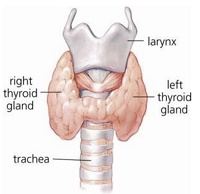
The thyroid gland consists of two lobes, a right one and a left one, which are connected to each other and are wrapped around the dog's thrachea just beneath the larynx in the area of its throat. The thyroid gland produces hormones which maintain the dog's metabolic rate -- the speed at which the dog converts nutritional energy into fuel for the body. These hormones are T3 (triiodothyronine) and T4 (thyroxine).
When the thyroid deteriorates, it begins to produce insufficient quantities of the thyroid hormones. Then the body's cells are unable to convert nutrient energy into energy fuel as quickly as normal.
Primary hypothyroidism is the most come type, caused either by lymphocytic thyroiditis or idiopathic atrophy in most cases.There is some evidecne that idiopathic atrophy actually is a later stage of the progression of lymphocytic thyroiditis. Other forms include aggressive thyroid neoplasia, which potentially may destroy the thyroid lobes. Secondary hypothyroidism refers to being due to a defect in the pituitary gland, and tertiary hypothyroidism is attributed to the hypothalamus initially being affected.
RETURN TO TOP
Causes
Up to 80% of all hypothyroidism in canines is due to autoimmune (lymphocytic) thyroiditis, by which T-lymphocytes destroy the thyroid gland.
Another possible cause of hypothyroidism is trauma to the thyroid gland, caused by collars. And a third possible cause, or contributing factor, is the dietary supplement quercetin. In this April 2014 article, the researchers found that the flavonoid quercetin can act as a thyroid disruptor which inhibits thyroid function and decreases the expression of the main thyroid-restricted genes involved in thyroid hormone synthesis.
In a December 2016 article, a team of University of California-Davis reasearchers report finding that neutered dogs had a significantly greater risk of hypothyroidism. They examined the medical records from 1995 to 2010 of 90,090 dogs of all AKC-recognized breeds treated at their veterinary hospital, to determine the relation between neuter status and autoimmune diseases.
Vaccines, especially rabies, can trigger the autoimmune version of hypothyrodism.
RETURN TO TOP
Symptoms
The early signs of hypothyroidism may be vague and not specific or unique to the disease. This may lead to a presumptive and erroneous diagnosis of hypothyroidism in dogs with normally functioning thryoid glands (euthyroid).Common symptoms may include:
• Lethargy
• Weight gain
• Exercise intolerance
• Cold intolerance
• Thining hair
• Dry coat
• Skin pigmentation
• Pustules that form on the skin (pyoderma)
• Seborrhea
Less common signs include:
• Diarrhea
• Decreased libido
• Facial nerve paralysis
• Megaesophagus
• Vestibular disease
• Laryngeal paralysis
• Keratoconjunctivitis sicca (dry eye)
• Lipid corneal dystrophy
• Bradycardia
• Thickening of the skin
It is most unfortunate that by the time most clinical signs of hypothyroidism appear, as much as 75% of the dog's thyroid gland may have been irreversibly destroyed. The dog may have had hypothyroidism well over a year before it can be diagnosd from outward symptoms.
The result causes physical changes in the cavalier, including weight gain without any change in diet, skin infections, hair loss, temperament changes, lethargy, mental dullness, joint disease, ligament damage, and aggression towards human family members.
RETURN TO TOP
Diagnosis
 Early diagnosis from classic symptoms is extremely difficult because so much
damage to the gland already would have occurred before clinical signs normally
appear. Also, a definitive diagnosis can be very difficult because reduced
thyroid function can produce any of a number of symptoms which may mimic those
of other causes.
Early diagnosis from classic symptoms is extremely difficult because so much
damage to the gland already would have occurred before clinical signs normally
appear. Also, a definitive diagnosis can be very difficult because reduced
thyroid function can produce any of a number of symptoms which may mimic those
of other causes.
Therefore, owners -- especially breeders -- should have a complete baseline thyroid antibody profile of their cavalier conducted before any symptoms appear, followed by (at least) annual profiles thereafter. Thyroid testing for genetic screening purposes should start after the cavalier has reached its sexual maturity, and females should not be tested for screening until they are between their first and second heats.
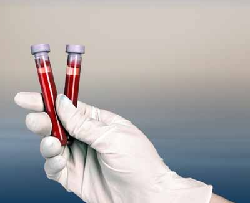
Low levels of T3 and/or T4 in the blood plasma may indicate hypothyroidism.
Thyroid testing includes:
• TT4 (total thyroxine): This measures the amount of thyroxine, the thyroid gland's primary hormone, bound to proteins and floating freely in the dog's bloodstream
• FT4 (free thyroxine): This measures only the thyroxine floating freely in the bloodstream.
• TT3 (total tri-iodothyronine): This measures the amount of a thyroid hormone which is created by modification of T4 outside of the thyroid gland.
• TgAA (thyroglobulin auto-antibodies): This measures antibodies tha bind to thyrogloulin, which is a protein involved in the production of T3 and T4. These antibodies indicate inflammtion in the thyroid gland. It is reported that the presence of elevated TgAA levels usually confirms thyroiditis.
• T3AA: This is a thyroid antibody measurement that includes the active vorm of the hormone.
• T4AA: This is a thyroid antibody measurement that includes the inactive form created to circulate in the bloodstream.
• TSH (thyroid stimulation hormone): This measures the hormone produced by the pituirary gland and which stimulates the thyroid gland to increase the production of hormones. In cases of hypothyroidism, TSH levels are elevated, and in hyperthyroidism (overactive thyroid) cases, TSH levels are low.
There have been reports of inaccurate results from in-house measurements of TT4 and perhaps should not be relied upon in cases of diagnosis. One concern is that the use of in-house machines compared to an external laboratory for the measurement of TT4 could increase the risk of supplementation with levothyroxine to dogs that do not require it.
See Dr. Jean Dodds' website, Hemopet.com, for more information about thyroid testing.
Subclinical thyroiditis is a syndrome in which the affected dog has an elevated TgAA level, indicating inflammation in the thyroid gland, but the hormone and TSH levels remain normal. Dogs diagnosed with subclinical thyroiditis may have normal levels for several years, with about a third of them progressing to clinical hypothyroidism, requiring any treatment. Very few such dogs will revert back to normal thyroid functioning. It is recommended that dogs diagnosed with subclinical thyroiditis should be re-tested annually.
Be aware, however, that several medications being given to the dog may alter the thyroid function test results, particularly glucocorticoids, phenobarbital, NSAIDs (eg, aspirin), prednisone (but not TSH), sulfonamides, inhalant anesthetics, clomipramine, toceranib, amiodarone, and trilostane. Sulphonamides can induce hypothyroidism, which can be reversible upon stopping the medication. Such test results should be interpreted with caution. See this July 2023 article.
Also, non-thyroidal factors, such as concurrent illness, age, and sex can affect the results of measurements of TT4, TSH, and FT4 concentrations.
RETURN TO TOP
Treatment
Veterinarians treat hypothyroidism by prescribing a supplemental thyroid hormone -- usually thyroxine (T4) or levothyroxine and/or liothyronine -- which must be administered to the cavalier daily for the rest of its life. Once the supplemental hormone has stabilized the thyroid-hormone levels within a normal range, the dog should be examined at least every six months.
 Thyro-Tabs Canine (levothyroxine sodium tablets)
is the only FDA-approved levothyroxine drug for hypothyroidism in dogs. In a
January 2016 news release, the U.S. Food and Drug Administration
(FDA) reports that it has issued warning letters to six manufacturers of
unapproved levothyroxine sodium drugs for hypothyroidism in dogs. These
unapproved products have not been reviewed by the FDA for safety and
effectiveness. FDA issued warning
letters to manufacturers of the following unapproved levothyroxine
products:
Thyro-Tabs Canine (levothyroxine sodium tablets)
is the only FDA-approved levothyroxine drug for hypothyroidism in dogs. In a
January 2016 news release, the U.S. Food and Drug Administration
(FDA) reports that it has issued warning letters to six manufacturers of
unapproved levothyroxine sodium drugs for hypothyroidism in dogs. These
unapproved products have not been reviewed by the FDA for safety and
effectiveness. FDA issued warning
letters to manufacturers of the following unapproved levothyroxine
products:
Thyrosyn
Soloxine
Levocrine
Thyromed
Thyroid Chewable Tablets
Thyrokare
Thyroxine L
Thyrovet
Leventa
Unless and until these levothyroxine products are approved by FDA, they are deemed to be "unsafe" and "adulterated". Introduction of an adulterated drug into interstate commerce is prohibited under by federal law. Dog owners and veterinarians can report to the FDA any adverse events, including ineffectiveness, in dogs that received approved or unapproved hypothyroidism products. Information on reporting adverse events can be found here.
A general thyroid support supplement often recommended by holistic veterinarians is Canine Thyroid Support by Standard Process (right).
Any foods containing glutens should be avoided if the cause of thyroiditis is autoimmune. Glutens (such as wheat, barley, rye, oats, spelt, couscous) in the dog's food can stimulate autoimmune thyroiditis. The common protein in glutens is gliadin, a protein which has a similar molecular structure to the thyroid's hormone, thyroxine. When the gliadin enters the bloodstream from the gut, the antibodies in the dog's immune system move to destruct it and also causes the immune stystem to attack the thyroxine by mistake.
RETURN TO TOP
Breeders' Responsibilities
The Canine Inherited Disorders Database advises that no dog suffering from autoimmune thyroiditis or hypothyroidism should be bred. All cavalier breeding stock and their close relatives should be blood-tested and cleared for autoimmune thyroiditis at least annually, the closer the examination to the breeding the better.
The Orthopedic Foundation for Animals (OFA) maintains a Thyroid Registry which is useful for breeders attempting to choose dogs free of hypothyroidism in their breeding programs. However, OFA's Thyroid Registry only requires a limited thyroid panel and by itself is not sufficient for the early detection of genetic autoimmune thyroiditis.
Antech Diagnostics, the largest veterinary diagnostic laboratory, also recommends that even dogs with negative screening results not be bred before age three years.
RETURN TO TOP
Research News
April 2019:
Healthy cavaliers' thyroid reference levels are found to differ
significantly from standard all-breed intervals.
 In
an
April 2019 abstract at the BVASA Congress, researchers Olivia
Barnard-Jones, Kent Refsal, and Peter Graham (right) studied
the records of the thyroid levels of 81,985 thyroid-healthy dogs of 214
breeds to determine whether breed-specific thyroid reference levels
would be more appropriate than the current species-wide reference levels
used to diagnose hypothyroidism. They also sought to discover whether
there are breed influenced age-related thyroid changes. They explored
total and free thyroxine, TT4, FT4, TT3, FT3, and thyrotropin (TSH)
using serum thyroid profile results. They created breed reference
intervals for 77 breeds with more than 140 cases. They report finding
over-all that breed-specific reference limits differed. Details are in
the
linked abstract. The cavalier King Charles spaniel was found to be
at either at the lowest or highest limit, depending upon the test. The
cavalier's lower limit for TT4 was 17 nmol/L. There was a breed effect
on age-related thyroid hormone decline and TSH increase. TT4 declined to
-1.324 nmol/L/yr in the cavalier. TSH increased to 0.0137 ng/ml/yr in
the CKCS. They concluded that the cavalier's thyroid reference intervals
differed significantly from all-breed intervals with a consequent risk
of misdiagnosis, resulting in unnecessary life-long treatment. They also
concluded that some breeds also have quicker "thyroid-axis-ageing" than
others.
In
an
April 2019 abstract at the BVASA Congress, researchers Olivia
Barnard-Jones, Kent Refsal, and Peter Graham (right) studied
the records of the thyroid levels of 81,985 thyroid-healthy dogs of 214
breeds to determine whether breed-specific thyroid reference levels
would be more appropriate than the current species-wide reference levels
used to diagnose hypothyroidism. They also sought to discover whether
there are breed influenced age-related thyroid changes. They explored
total and free thyroxine, TT4, FT4, TT3, FT3, and thyrotropin (TSH)
using serum thyroid profile results. They created breed reference
intervals for 77 breeds with more than 140 cases. They report finding
over-all that breed-specific reference limits differed. Details are in
the
linked abstract. The cavalier King Charles spaniel was found to be
at either at the lowest or highest limit, depending upon the test. The
cavalier's lower limit for TT4 was 17 nmol/L. There was a breed effect
on age-related thyroid hormone decline and TSH increase. TT4 declined to
-1.324 nmol/L/yr in the cavalier. TSH increased to 0.0137 ng/ml/yr in
the CKCS. They concluded that the cavalier's thyroid reference intervals
differed significantly from all-breed intervals with a consequent risk
of misdiagnosis, resulting in unnecessary life-long treatment. They also
concluded that some breeds also have quicker "thyroid-axis-ageing" than
others.
January 2016:
US's Food & Drug Administration warns drug
manufacturers to not market levothyroxine sodium drugs unapproved by FDA.
In a
January 2016 news release, the U.S. Food and Drug Administration
(FDA) reports that it has issued warning letters to six manufacturers of
unapproved levothyroxine sodium drugs for hypothyroidism in dogs. These
unapproved products have not been reviewed by the FDA for safety and
effectiveness. Thyro-Tabs Canine (levothyroxine sodium tablets) is the
only FDA-approved levothyroxine drug for hypothyroidism in dogs. FDA issued warning
letters to manufacturers of the following unapproved levothyroxine
products:
Thyrosyn
Soloxine
Levocrine
Thyromed
Thyroid Chewable Tablets
Thyrokare
Thyroxine L
Thyrovet
Leventa
Unless and until these levothyroxine products are approved by FDA, they are deemed to be "unsafe" and "adulterated". Introduction of an adulterated drug into interstate commerce is prohibited under by federal law. Dog owners and veterinarians can report to the FDA any adverse events, including ineffectiveness, in dogs that received approved or unapproved hypothyroidism products. Information on reporting adverse events can be found here.
 July
2012: Anesthesia for
Thyroid Gland Disease. In
a July 2012 article in NAVC Clinician's Brief, by Dr. Khursheed Mama
(right) advises
that dogs with clinical signs of hypothyroidism may have lower anesthetic
requirements and may also have prolonged anesthetic recoveries. He recommends
that body temperature be monitored, especially since hypothermia is common in
hypothyroid patients.
July
2012: Anesthesia for
Thyroid Gland Disease. In
a July 2012 article in NAVC Clinician's Brief, by Dr. Khursheed Mama
(right) advises
that dogs with clinical signs of hypothyroidism may have lower anesthetic
requirements and may also have prolonged anesthetic recoveries. He recommends
that body temperature be monitored, especially since hypothermia is common in
hypothyroid patients.
April 2011: Dr. Jean Dodds publishes new book. The Canine Thyroid Epidemic: Answers You Need for Your Dog. by W. Jean Dodds and Diana Laverdure, to inform both the average dog owner and animal health care professionals about the ways in which thyroid disorders occur, can be prevented and treated.
 July 2006:
Participants needed for dog behavioral study. Dr. Nicholas Dodman
(right)
of the Animal Behavior Clinic at Tufts Cummings School of Veterinary Medicine in
North Grafton, Massachusetts, and Dr. Jean Dodds, are seeking participants for a
study concerning the efficacy of supplementing low, or borderline low, thyroid
levels as a treatment for owner-directed aggression. If you have a dog
that is aggressive towards human family members and is not currently being
treated for hypothyroidism, please contact Nicole Cottam, telephone
508-887-4802, email nicole.cottam@tufts.edu to find out more about the study.
You do not have to visit Tufts in order to participate.
July 2006:
Participants needed for dog behavioral study. Dr. Nicholas Dodman
(right)
of the Animal Behavior Clinic at Tufts Cummings School of Veterinary Medicine in
North Grafton, Massachusetts, and Dr. Jean Dodds, are seeking participants for a
study concerning the efficacy of supplementing low, or borderline low, thyroid
levels as a treatment for owner-directed aggression. If you have a dog
that is aggressive towards human family members and is not currently being
treated for hypothyroidism, please contact Nicole Cottam, telephone
508-887-4802, email nicole.cottam@tufts.edu to find out more about the study.
You do not have to visit Tufts in order to participate.
RETURN TO TOP
Related Links
RETURN TO TOP
Veterinary Resources
Keratoconjunctivitis sicca in the dog: a review of two hundred cases. Jane Sansom, K.C. Barnett. J.Sm.Anim.Pract. March 1985; 26(3):121-131. Quote: Two hundred consecutive referred cases of keratoconjunctivitis sicca [KCS] in the dog were examined over a 9 year period [including 11 cavalier King Charles spaniels]. The clinical signs are described and the cases discussed in sections relating to the aetiology and in particular, the age and sex incidence in the West Highland White Terrier. The suitability of this animal as a model for Sjogrens syndrome in man is discussed. ... Hypothyroidism: The association between KCS and hypothyroidism has already been suggested (Peruccio, 1982) and a further two cases in this series supported this theory although the hypothyroidism had not previously been suspected. Nine other cases were sampled but radioimmune assay of serum samples for thyroxine (T4) revealed normal levels. Both dogs were male, a 5-year-old Cavalier King Charles Spaniel and a 7-yearold Shetland Sheepdog. Both showed clinical signs of hypothyroidism in that they were obese and lethargic with a dry coat and soft, pendulous testicles. Blood samples revealed hypercholesterolaemia and low T4 values and both dogs showed a marked improvement in condition when treated with thyroid fed by mouth. The Cavalier King Charles had an extremely painful left eye with blepharospasm and photophobia, marked conjunctival congestion and thick mucopurulent discharge, an oedematous cornea with vascular fringe and a central deep ulcer. The Schirmer tear test reading was zero. The other eye had a slightly tacky discharge with a Schirmer reading of 8 mm of wetting per minute.
Control of Canine Genetic Diseases. Padgett. G.A., Howell Book House 1998, pp. 198-199, 222.
Hereditary Hypothyroidism: Understanding the disease process. Jerold S. Bell. AKC Gazette. Aug. 2001. Quote: "Canine hypothyroidism is frequently misunderstood, misdiagnosed, and mistreated. Historically, it has been thought that 50 percent of cases of canine hypothyroidism are caused by autoimmune thyroiditis, and the rest are caused by idiopathic hypothyroidism. What the experts now understand is that almost all primary hypothyroidism in dogs is caused by thyroiditis (autoimmune destruction of the thyroid gland), and that this is a genetic disorder. Primary idiopathic hypothyroidism, if it exists at all, is a rare condition. The confusion comes from looking at blood test 'snapshots' of hypothyroid dogs, and not understanding the whole 'moving picture' of thyroid disease. ... There are metabolic, infectious, endocrinologic, and cancerous illnesses that have no autoimmune components but which can nonetheless cause low thyroid-hormone values. This problem, which occurs less frequently is generally referred to as secondary hypothyroidism. It is not a hereditary thyroid disorder. There is some controversy as to whether environmental toxins or vaccines cause autoimmune thyroiditis. These act as stresses on a dog's body and could possibly affect the onset or severity of autoimmune thyroiditis. However, Dr. W. Jean Dodds, founder of the animal blood bank Hemopet, states that only dogs that have the genetic potential can develop autoimmune thyroiditis. Therefore, any dog that has significant levels of blood-thyroid autoantibodies is considered genetically affected with hypothyroidism, and to carry a gene (or genes) that cause the disorder. Dr. Dodds also reports that thyroid supplementation may be protective to dogs with thyroid autoantibodies even before their thyroid hormone levels drop. ... Studies on the mode of inheritance of hereditary hypothyroidism/autoimmune thyroiditis in dogs have been inconclusive to date. What has been established is that some breeds have a much greater likelihood of developing autoimmune thyroiditis than do others, while some breeds have a below-average risk. These breeds respectively carry a higher or lower genetic load of hypothyroidism causing genes. ... Breeds with the lowest prevalence (<3% affected) of hypothyroidism (Data from the endocrinology lab at Michigan State University): ... Cavalier King Charles Spaniel ... ."
Guide to Congenital and Heritable Disorders in Dogs. Dodds WJ, Hall S, Inks K, A.V.A.R., Jan 2004, Section II(166).
The Thyroid Dilemma. Antech Diagnostics News Lab Tips, October and November 2005.
How to Test, Interpret Thyroid Function. W. Jean Dodds, DVM. Veterinary Practice News. April 12, 2011.
Anesthesia for Thyroid Gland Disease. Khursheed Mama. NAVC Clinician's Brief. July 2012.
Thyroid Disease and Autoimmune Thyroiditis. W. Jean Doods. Hemopet.org December 2013.
The flavonoid quercetin inhibits thyroid-restricted genes expression and thyroid function. Giuliani C, Bucci I, Di Santo S, Rossi C, Grassadonia A, Piantelli M, Monaco F, Napolitano G. Food Chem. Toxicol. April 2014;66:23-29. Quote: Quercetin is the most abundant flavonoid present in a broad range of fruit and vegetables. Furthermore, quercetin is available as dietary supplements that are based on its antioxidant, antiproliferative and anti-inflammatory properties. However, concerns have been raised about the potential toxic effects of excessive intake of quercetin, and several studies have demonstrated that flavonoids, included quercetin, can interfere with thyroid function. In a previous report, we showed that quercetin inhibits thyroid-cell growth and iodide uptake. The latter effect was associated with down-regulation of sodium/iodide symporter gene expression. In the present study, we have evaluated the effects of quercetin on the expression of other thyroid-restricted genes, and we show that quercetin decreases the expression of the thyrotropin receptor, thyroid peroxidase and thyroglobulin genes. We further investigated the inhibitory effects of quercetin on thyroid function in vivo through evaluation of radioiodine uptake in the Sprague-Dawley rat, which was significantly decreased after 14 days of quercetin treatment. These data confirm that quercetin can act as a thyroid disruptor, and they suggest that caution is needed in its supplemental and therapeutic use. Our data show that quercetin inhibits thyroid function and decreases the expression of the main thyroid-restricted genes involved in thyroid hormone synthesis. These effects that we have here demonstrated in vitro, are also confirmed here by inhibition of thyroid radioiodine uptake in normal rats. These data are relevant given the worldwide diffusion of dietary supplements containing high amounts of quercetin, and they should spur on human studies to better define these anti-thyroid effect of quercetin. The data of the present study comes from experiments performed in rats. Therefore, to define quercetin as a thyroid endocrine disruptor even for human, further studies must be conducted in human ingesting quercetin supplements or involved in clinical trials with quercetin. Meanwhile, we also suggest that the use of quercetin in pregnant and lactating women should be avoided, along with its use for patients with hypothyroidism and for candidates for radioiodine administration.
Histological and immunohistochemical evaluation of stroma variations and their 4 correlation with the Ki-67 index and expressions of glucose transporter 1 and 5 monocarboxylate transporter 1 in canine thyroid C-cell carcinomas. Yoshio Kawamura, Hiroko Mizooku, Minoru Okamoto, Kazuya Matsuda, Tetsuo Omachi, Kazuko Hirayama, Tsuyoshi Kadosawa, Hiroyuki Taniyama. J. Vet. Med. Sci. January 2016. Quote: "Canine thyroid C-cell carcinomas (CTCCs) are malignant tumors derived from calcitonin-producing C-cells of the thyroid gland. This study aimed to investigate the histological diversity of CTCCs from the viewpoint of stroma variations and to investigate their components by histological and immunohistochemical analysis including semiquantitative analysis of the density of microvessels (MVs) and a-SMA-positive cell count. Moreover, we examined whether the variations correlated with the Ki-67 index and expressions of glucose transporter 1 (GLUT-1) and monocarboxylate transporter 1 (MCT-1). Three stroma types (reticular, R, nest, N, and trabecular, T) were observed in CTCCs and 21 cases were divided into 3 variations based on their combinations: mixed R and N (R/N) (n=7), simple N (n=7) and mixed T and N (T/N) (n=7). [One cavalier King Charles spaniel: female aged 10 years, tumor diameter: 4 cm., period to surgical treatment: 300 days.] Immuno-histochemically, stroma types depended on morphological features of a-SMA/fibronectin/laminin/collagen type IV-positive stroma cells. The density of MVs in R/N tended to be highest, and the density of those in N was significantly higher than the density of those in T/N (P=0.028). The a-SMA-positive cell count for N tended to be the lowest among the 3 variations. The Ki-67 index for R/N was significantly higher than those of the other variations (vs. N, P=0.007; vs. T/N, P=0.03), and that for T/N tended to be higher than that for N. Although there were no significant differences, GLUT-1 and MCT-1 expressions tended to be low in N. We concluded that stroma variations reflect tumor cell proliferation and expressions of GLUT-1 and MCT-1 in CTCCs."
Cardiogenic Pulmonary Edema in a Dog Following Initiation of Therapy for Concurrent Hypoadrenocorticism and Hypothyroidism. Jooyae Paik, Ji-Houn Kang, Dongwoo Chang, Mhan-Pyo Yang. JAAHA. September 2016. Quote: A 5-year-old intact female cocker spaniel dog weighing 7.8 kg was referred with anorexia, vomiting, and depression. At referral, the dog was diagnosed initially with typical hypoadrenocorticism, and 2 d later, concurrent primary hypothyroidism was detected. Hormonal replacement therapies, including fludrocortisone, prednisolone, and levothyroxine, were initiated, but a few days later the dog became abruptly tachypneic, and thoracic radiographs indicated the development of pulmonary edema. Echocardiography showed that there were abnormalities indicating impaired left ventricular function, although the heart valves were normal. Following treatment with pimobendan and furosemide, the pulmonary edema resolved. The dog had no recurrence of the clinical signs after 10 mo of follow-up, despite being off all cardiac medications; consequently, the cardiac failure was transient or reversible in this dog. The case report describes the stepwise diagnosis and successful treatment of cardiogenic pulmonary edema after initiation of hormonal replacement therapy for concurrent hypoadrenocorticism and hypothyroidism in a dog.
Breed influence on canine thyroid reference intervals and age-related thyroid decline. Olivia Barnard-Jones, Kent Refsal, Peter Graham. BSAVA Congress 2019 proceedings; pp. 438. Quote: Objectives: Hypothyroidism is a common canine condition which can be difficult to diagnose. Misdiagnosis can result in unnecessary life-long treatment. One complicating factor may be variation in thyroid hormone reference intervals between breeds, previously shown to be diagnostically important in sighthounds. Increasing age is associated with decreasing thyroxine and increasing TSH serum concentrations, but breed influence on this effect has not previously been explored. This projects aimed to investigate whether more, non-sighthound, breed-specific reference intervals would be appropriate and to discover whether breed influenced age-related thyroid changes. Methods: The study explored total and free, thyroxine and 3-5-3'-triiodothyronine (TT4, FT4, TT3, FT3), and thyrotropin (TSH) in 81,985 euthyroid dogs from 214 breeds using a database of serum thyroid profile results. Breed reference intervals (2.5 to 97.5 percentile) were created for 77 breeds with more than 140 cases. Results: Breed-specific reference limits differed; the lower limit for TT4 ranged from 7 (Sharpei) to 17 nmol/L (Cavalier King Charles Spaniel; CKCS) and the upper TSH limit from 0.44 (Soft Coated Wheaten Terrier) to 0.63 ng/ml ( Keeshond). There was a breed effect on age-related thyroid hormone decline and TSH increase. TT4 decline ranged from -0.021 (Basenji) to -1.324 (CKCS) nmol/L/yr. TSH increase ranged from 0.00097 (Bulmastiff) to 0.0137 (CKCS) ng/ml/yr. Statement (Conclusions): Breeds other than the sighthound group would benefit from their own breed-specific thyroid reference intervals, such as CKCS, as they differed significantly from all-breed intervals with a consequent risk of misdiagnosis. Some breeds also have quicker "thyroid-axis-ageing" than others.
Influence of medications on thyroid function in dogs: An update. Timothy A. Bolton, David L. Panciera. J. Vet. Intern. Med. July 2023; doi: 10.1111/jvim.16823. Quote: Erroneous thyroid function test results can occur because of drugs that alter thyroid hormone physiology in one or more aspects, including synthesis, secretion, distribution, and metabolism. Research since publication of the last review in the Journal of Veterinary Internal Medicine (JVIM) 20 years ago has evaluated the effects of amiodarone, zonisamide, inhalant anesthetics, clomipramine, trilostane, and toceranib on thyroid function tests in the dog. In addition, recent work on the effects of glucocorticoids, sulfonamides, phenobarbital, and nonsteroidal anti-inflammatory drugs will be reviewed. Awareness of these effects is necessary to avoid misdiagnosis of hypothyroidism and unnecessary treatment. ... The list of drugs studied and found to alter thyroid function test results in dogs has increased over the last 20 years. In general, dogs receiving glucocorticoids, phenobarbital, NSAIDs (eg, aspirin), sulfonamides, inhalant anesthetics, clomipramine, toceranib, amiodarone, and trilostane should have thyroid function test results interpreted with caution. For some drugs, such as glucocorticoids and sulfonamides, drug dosage and treatment duration dictate whether a clinically relevant impact on thyroid function will occur. If feasible, dogs given medications known to affect thyroid function should not even have thyroid testing performed because it is likely to result in inaccurate test interpretation and potentially unnecessary treatment. If thyroid function testing is performed, interpretation of abnormal test results in the context of history and physical examination findings is crucial. Knowledge of the drugs that affect thyroid function test results in dogs and the duration of drug withdrawal, if known, needed for resolution of such effects are required for accurate interpretation of thyroid test results.
Assessment of the likelihood of hypothyroidism in dogs diagnosed with and treated for hypothyroidism at primary care practices: 102 cases (2016-2021). Victoria Travail, Carolina Fernandez Sanchez, Jose M. Costo, Nicola Valentine, Megan Conroy, Venessa Lee, Dimitrios Bouziopoulos, Kathryn Bateman, Emma Gatehouse, Judith Cruzado-Perez, Danica Pollard, Valerie Lamb, Florence Juvet, Darren Kelly. J. Vet. Intern. Med. February 2024; doi: 10.1111/jvim.16993. Quote: Background: There is a possibility that an incorrect diagnosis of hypothyroidism could be made in euthyroid dogs, and the prevalence of hypothyroidism in the dog population remains unknown. Objectives: To retrospectively assess the percentage of dogs diagnosed with, and treated for, hypothyroidism at first opinion practice which are likely to be hypothyroid and require levothyroxine supplementation. Animals: One hundred two client-owned dogs were included in this study. ... Of the 102 included dogs, Of the 102 included dogs, there were ... 10 Labrador retrievers (9.8%), 9 Border collies (8.8%), 8 English springer spaniels (7.8%), 6 German shepherd dogs (5.8%), 5 Cocker spaniels (4.9%), 4 Golden retrievers (3.9%), 4 Boxers (3.9%), 4 Staffordshire bull terriers (3.9%), 3 Schnauzers (2.9%), 3 Cavalier King Charles spaniels (2.9%), ... Materials and Methods: The computerized databases of 7 first opinion practices were searched to identify dogs treated with levothyroxine supplementation. Three European College of Veterinary Internal Medicine--Companian Animals (ECVIM-CA) diplomates independently assigned 1 of 4 clinical assessments to each case as follows: confirmed or likely hypothyroid, hypothyroidism suspected but not confirmed, hypothyroidism considered unlikely, and no reason to suspect hypothyroidism. They commented as to whether or not they thought levothyroxine supplementation was appropriate. Results: The clinical assessments of "confirmed or likely hypothyroid"; "Hypothyroidism suspected but not confirmed"; "Hypothyroidism considered unlikely"; and "No reason to suspect hypothyroidism" was assigned respectively by Clinician 1 to 38.2%, 5.9%, 3.9%, and 52% of cases, by Clinician 2 to 48%, 22.6%, 22.6%, 6.9% of cases, and by Clinician 3 to 55.9%, 11.8%, 13.7% and 18.6%. Clinician 1, Clinician 2, and Clinician 3 considered levothyroxine supplementation not indicated in 58.8%, 52.9%, and 45.1% of cases, respectively.
CONNECT WITH US